
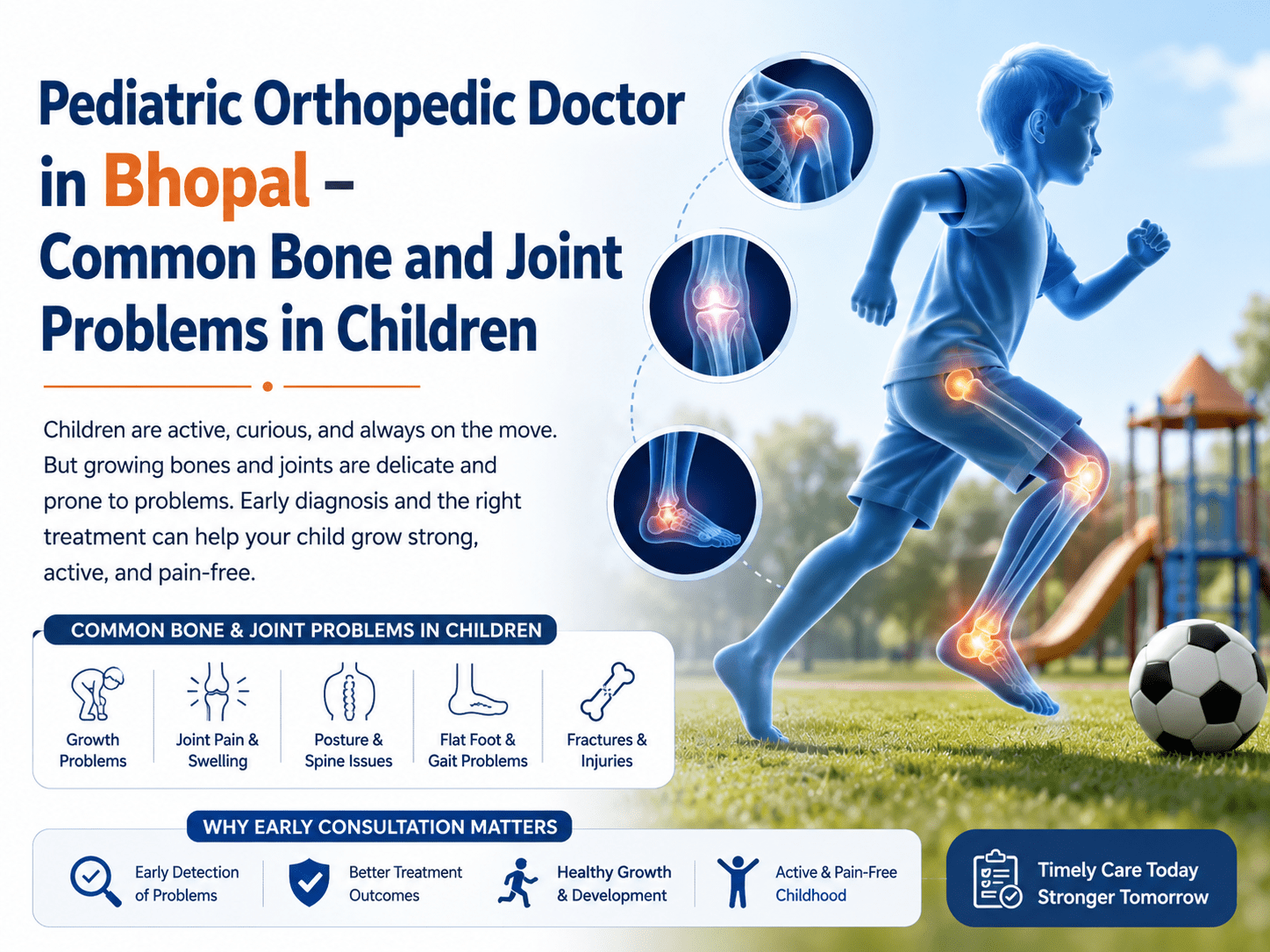
A Pediatric Orthopedic Doctor in Bhopal focuses on evaluating bone, joint, muscle, limb, and movement-related concerns in growing children. Because children’s bones are still developing, their treatment needs to be planned carefully according to age, growth, symptoms, and the underlying condition.
Children are naturally active. Running, jumping, playing sports, cycling, and other physical activities are important for healthy growth, but they can also lead to bone and joint problems. Some orthopedic conditions may be present from birth, while others develop during growth or occur because of injuries. Early assessment can help parents understand whether a problem is a normal part of development or requires treatment from an experienced orthopedic professional.
About Dr. Kewal Gangrade – Best Orthopedic Surgeon in Bhopal
Dr. Kewal Gangrade is an experienced Orthopedic Surgeon in Bhopal with around 15 years of experience in orthopedic care and sports injuries. He has performed more than 10,000 surgeries during his professional career and has developed extensive experience in managing different orthopedic conditions.
Dr. Kewal Gangrade has completed MBBS, D Ortho and DNB and received his professional training in Pune, Maharashtra, and Secunderabad, Telangana. His experience includes both surgical and non-surgical orthopedic treatment.
As a Pediatric Orthopedic Doctor in Bhopal, proper evaluation of a child’s developing bones is important before deciding on any treatment. Dr. Gangrade’s broader orthopedic expertise includes complicated bone fractures, sports injuries, joint replacement procedures, surgical revisions, rehabilitation, and personalized orthopedic care.
His treatment approach focuses on understanding the patient’s condition, explaining available treatment options, and supporting recovery through appropriate rehabilitation.
Understanding Pediatric Orthopedic Problems
Children can experience several types of bone and joint problems while growing. Some are temporary developmental variations, while others may require regular monitoring or treatment.
Common Pediatric Orthopedic Problems include:
- Bone fractures
- Sports injuries
- Joint injuries
- Bow legs
- Knock knees
- Flat feet
- Clubfoot
- Hip problems
- Limb alignment problems
- Spinal problems
- Growth-related orthopedic conditions
- Muscle and tendon injuries
A Pediatric Orthopedic Specialist in Bhopal can evaluate these problems according to the child’s age, symptoms, physical development, and medical history.
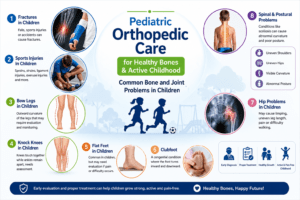
Common Bone and Joint Problems in Children
1. Fractures in Children
Children are more likely to experience injuries because of their active lifestyle. Falls while playing, cycling accidents, sports injuries, and other accidents can result in fractures.
A fracture in a growing child requires proper assessment because children’s bones contain growth plates. Depending on the location and severity of the injury, treatment may include a cast, splint, medication, follow-up imaging, or surgery.
Pediatric Fracture Treatment in Bhopal should always be planned according to the child’s age and the type of fracture.
An experienced Pediatric Orthopedic Doctor in Bhopal can assess the injury and determine whether conservative treatment or surgical management is required.
2. Sports Injuries in Children
Sports are beneficial for physical fitness, but children may experience injuries involving the knee, ankle, shoulder, wrist, or other joints.
Common injuries include:
- Sprains
- Muscle strains
- Ligament injuries
- Fractures
- Joint injuries
- Overuse injuries
- Tendon problems
Pediatric Sports Injury Treatment in Bhopal may involve rest, activity modification, physiotherapy, medication, supportive devices, or surgery in selected cases.
Children should not be encouraged to continue playing when they have significant pain or swelling. Early orthopedic evaluation can help prevent an injury from becoming more complicated.
3. Bow Legs in Children
Bow legs are characterized by an outward curvature of the legs. Some bowing can be part of normal childhood development and may gradually improve as the child grows.
However, parents should seek professional assessment when:
- The bowing is severe.
- One leg is different from the other.
- The condition continues to worsen.
- The child experiences pain.
- Walking becomes difficult.
- The deformity remains beyond the expected developmental stage.
A Child Bone Specialist in Bhopal can assess the child’s leg alignment and determine whether observation or treatment is necessary.
4. Knock Knees in Children
Knock knees occur when the knees come closer together while the ankles remain separated. This can also occur as part of normal development.
In some children, the condition improves naturally with growth. However, significant or persistent deformity may require evaluation.
Parents should consult an orthopedic professional if knock knees are associated with pain, difficulty walking, unequal leg alignment, or progressive deformity.
5. Flat Feet in Children
Flat feet are common during childhood because the foot arch develops gradually. Many children have flexible flat feet without pain or functional limitations.
Treatment may not be necessary when the child is comfortable and active. However, persistent pain, stiffness, walking difficulty, or problems during physical activities may require evaluation.
A Pediatric Orthopedic Specialist in Bhopal can determine whether the child’s flat feet are simply part of normal development or require further assessment.
6. Clubfoot
Clubfoot is a congenital condition in which one or both feet are positioned inward and downward. It is generally identified during infancy.
Early evaluation and treatment are important. Depending on the severity, treatment may involve manipulation, casting, bracing, physiotherapy, or other procedures.
Parents should maintain regular follow-up because some children may require continued monitoring during growth.
7. Hip Problems in Children
Hip problems can affect infants, young children, or adolescents. Developmental hip conditions may cause restricted movement, uneven leg length, or difficulty walking.
Possible signs include:
- Unequal leg length
- Limited hip movement
- Uneven skin folds
- Limping
- Difficulty walking
- Pain in older children
Early diagnosis can help determine the most appropriate management.
8. Spinal and Postural Problems
Children can develop postural problems or spinal curvature during growth. Scoliosis is one condition in which the spine develops an abnormal sideways curve.
Parents may notice:
- Uneven shoulders
- Uneven hips
- One shoulder blade appearing more prominent
- Uneven waist
- Abnormal posture
- Visible curvature of the back
A Pediatric Orthopedic Doctor in Bhopal can examine the child’s posture and recommend imaging or monitoring when necessary.
Pediatric Orthopedic Treatment in Bhopal
Treatment depends on the diagnosis, severity of symptoms, age of the child, and stage of physical development.
Observation
Some childhood orthopedic conditions improve naturally as the child grows. In such cases, regular examinations may be recommended instead of immediate treatment.
Casting and Bracing
Casts and braces may be recommended for selected fractures, deformities, and developmental conditions. Their purpose depends on the child’s specific diagnosis.
Medication
Pain-relieving medicines may sometimes be recommended for orthopedic injuries. Medicines should be given to children only according to appropriate medical guidance.
Surgery
Some orthopedic conditions require surgery when non-surgical treatment is not sufficient. Surgery may be considered for complicated fractures, certain deformities, severe injuries, or selected joint and structural problems.
Dr. Kewal Gangrade has extensive orthopedic surgical experience, including complicated bone fractures, surgical revisions, joint replacement procedures, and sports injury management.
Pediatric Orthopedics in Bhopal – Diagnosis
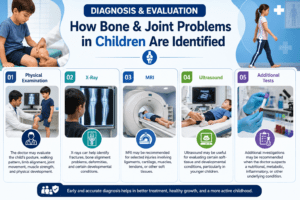
A proper diagnosis is an important part of pediatric orthopedic care. The doctor generally begins with a detailed medical history and physical examination.
The assessment may include:
Physical Examination
The doctor may evaluate the child’s posture, walking pattern, limb alignment, joint movement, muscle strength, and physical development.
X-Ray
X-rays can help identify fractures, bone alignment problems, deformities, and certain developmental conditions.
MRI
MRI may be recommended for selected injuries involving ligaments, cartilage, muscles, tendons, or other soft tissues.
Ultrasound
Ultrasound may be useful for evaluating certain soft-tissue and developmental conditions, particularly in younger children.
Additional Tests
Additional investigations may be recommended when the doctor suspects a nutritional, metabolic, inflammatory, or other underlying condition.
When Should Parents Visit a Pediatric Orthopedic Doctor?
Parents should consider an orthopedic consultation if their child has:
- Persistent bone or joint pain
- Difficulty walking
- Repeated falls
- A noticeable limp
- Abnormal posture
- Significant bow legs
- Severe knock knees
- Swelling around a joint
- Restricted joint movement
- Repeated sports injuries
- A visible deformity
- Difficulty participating in normal activities
A Pediatric Orthopedic Doctor in Bhopal can help determine whether the concern is part of normal growth or requires further investigation.
Pediatric Sports Injury Treatment in Bhopal
Children who participate in football, cricket, basketball, athletics, gymnastics, or other sports may experience different types of orthopedic injuries.
Treatment depends on the nature of the injury. Minor injuries may improve with rest and activity modification, while more serious injuries can require physiotherapy, immobilization, imaging, or surgery.
Proper rehabilitation is particularly important before returning to sports. Children should gradually resume physical activity after recovery rather than immediately returning to full-intensity exercise.
Dr. Kewal Gangrade’s experience in orthopedic surgery and sports injuries provides an important foundation for evaluating orthopedic injuries and planning appropriate treatment.
Why Choose Dr. Kewal Gangrade?
Choosing an orthopedic doctor for a child requires careful consideration of experience, diagnostic approach, treatment planning, and follow-up care.
15 Years of Orthopedic Experience
Dr. Kewal Gangrade has approximately 15 years of experience in orthopedic care and sports injuries.
More Than 10,000 Surgeries
His professional experience includes more than 10,000 orthopedic surgeries, reflecting extensive exposure to different orthopedic conditions.
Surgical and Non-Surgical Treatment
Orthopedic care may involve conservative treatment as well as surgical procedures depending on the patient’s condition.
Experience With Complicated Fractures
Dr. Gangrade manages complicated bone fractures and orthopedic injuries as part of his clinical practice.
Rehabilitation-Focused Care
Physical therapy and rehabilitation can form an important part of recovery after orthopedic injuries and procedures.
Personalized Treatment Planning
Each patient may require a different treatment approach. Understanding the patient’s condition and explaining treatment options can help families make informed decisions.
Dr. Kewal Gangrade – Education and Professional Expertise
Dr. Kewal Gangrade is a Consultant Orthopedic Surgeon with the following qualifications:
- MBBS
- D Ortho
- DNB
He has received professional training in Pune, Maharashtra, and Secunderabad, Telangana.
His areas of orthopedic expertise include:
- Orthopedic surgery
- Sports injuries
- Complicated bone fractures
- Joint replacement
- Surgical revisions
- Non-surgical orthopedic treatment
- Physiotherapy and rehabilitation
- Bone and joint care
For families looking for a Pediatric Orthopedic Specialist in Bhopal, it is important to discuss the child’s specific condition with a qualified orthopedic professional and understand whether specialized pediatric orthopedic care is appropriate.
Frequently Asked Questions – pediatric orthopedic care
What does a Pediatric Orthopedic Doctor treat?
A Pediatric Orthopedic Doctor in Bhopal evaluates bone, joint, muscle, limb, spine, and movement-related problems in children. Conditions can include fractures, sports injuries, deformities, hip problems, and other orthopedic concerns.
Are bow legs always a medical problem?
No. Some bowing can be a normal part of early childhood development. Severe, asymmetric, worsening, or persistent bowing should be evaluated by an orthopedic professional.
When should a child’s fracture be evaluated?
A suspected fracture should be assessed promptly, particularly when the child has severe pain, swelling, visible deformity, or difficulty using the affected limb.
Can children return to sports after an orthopedic injury?
Many children can return to sports after appropriate recovery. The timing depends on the injury and treatment. A gradual return under professional guidance is generally recommended.
Does every child with flat feet require treatment?
No. Many children have flexible flat feet without symptoms. Treatment may be considered when there is persistent pain, stiffness, or difficulty with walking and physical activities.
What is the role of physiotherapy in pediatric orthopedic care?
Physiotherapy can support strength, flexibility, balance, coordination, mobility, and rehabilitation after selected injuries or procedures.
Why is early orthopedic assessment important for children?
Children are still growing, so some orthopedic problems can change over time. Early assessment allows the doctor to monitor development and decide whether observation, treatment, or further testing is required.
Conclusion – pediatric orthopedic care
Children’s bones and joints undergo continuous development, making orthopedic care different from adult orthopedic treatment. While many childhood variations are part of normal growth, persistent pain, walking difficulties, abnormal limb alignment, repeated injuries, or visible deformities should be evaluated.
A Pediatric Orthopedic Doctor in Bhopal can help parents understand their child’s orthopedic condition and determine the appropriate next step. Depending on the diagnosis, treatment may include observation, physiotherapy, casting, bracing, medication, or surgery.
Dr. Kewal Gangrade is an experienced orthopedic surgeon with 15 years of experience and more than 10,000 surgeries, with expertise in orthopedic surgery, sports injuries, complicated fractures, joint replacement, surgical revisions, and rehabilitation. Families should discuss their child’s specific symptoms and treatment needs with an appropriately qualified orthopedic professional before deciding on treatment.